Themes & Theatre Ideas
Treat themes as playable tensions, not essay labels.
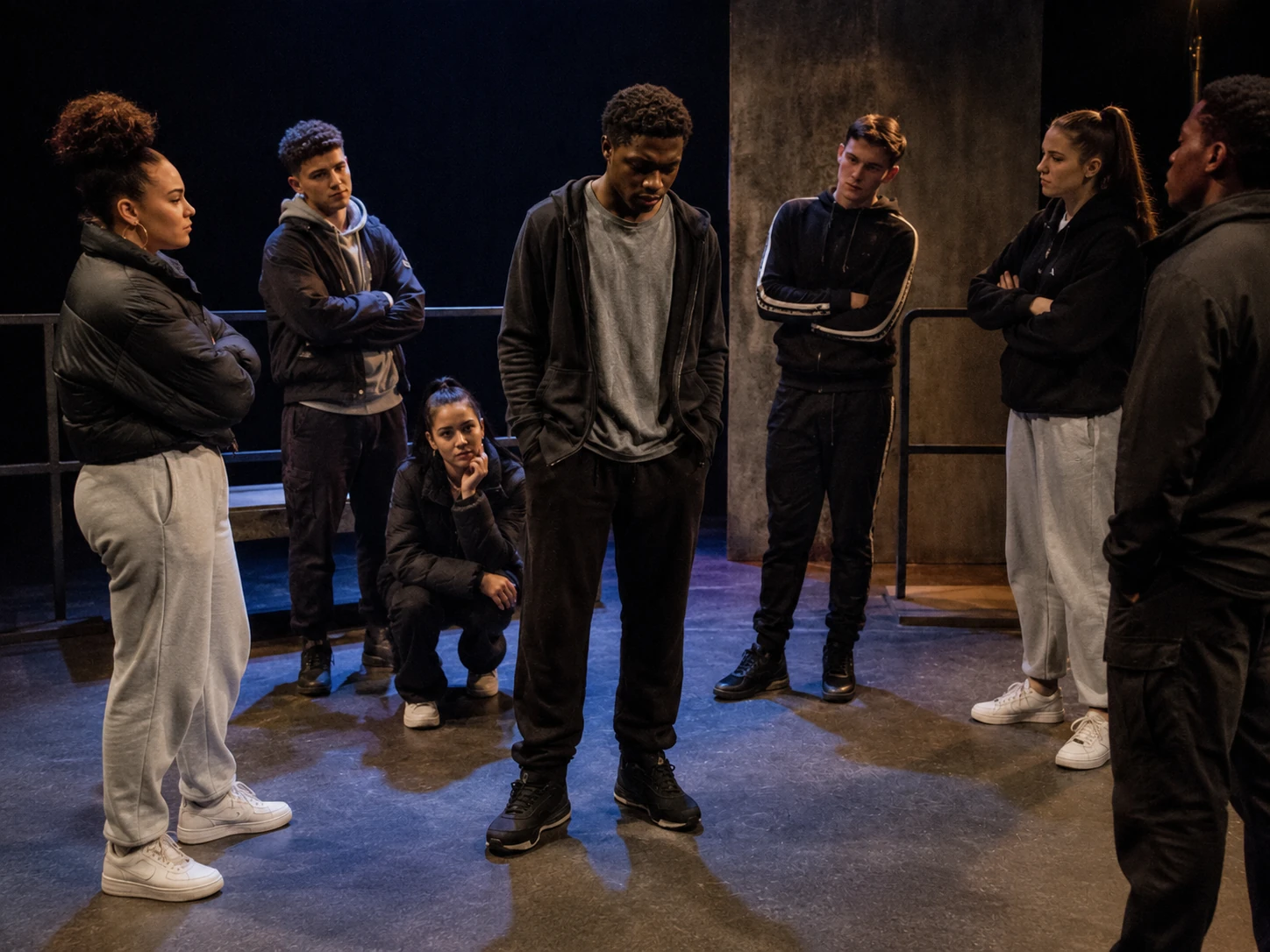
Theme prompt: how could you alter this same stage picture later in the play to show genuine change rather than simple victimhood?
Identity
The core question of the play is who Martin is when surface image, peer approval and visible appearance no longer line up. Theatrically, identity can be shown through repeated gestures, costume coding and how other people physically respond to him.
Appearance
The title points to the literal and symbolic importance of the face. Appearance shapes attraction, status, judgement and vulnerability. Lighting, sightlines and audience focus can all reinforce this theme.
Prejudice
Prejudice in the play is social, learned and often casual. A strong production shows how damaging ideas can hide inside ordinary conversation, jokes or group rituals rather than appearing only in obviously extreme moments.
Belonging
Martin’s early identity is strongly dependent on who he belongs with. Use ensemble movement, shared costume codes and group spacing to make that belonging visible before showing it fracture.
Masculinity
The play questions aggressive, performative masculinity. Physical swagger, refusal of vulnerability and fear of losing face all become playable theatrical choices.
Consequence and change
The attack matters not only because it is violent, but because it forces reassessment. The audience should leave asking whether Martin’s suffering has changed him and how durable that change will be.
Theme-to-stage conversion
| Theme | Practical choice | Possible audience effect |
|---|---|---|
| Identity | Repeat an opening pose later in altered form | The audience sees how Martin’s self-image has shifted. |
| Appearance | Control mirrors, reflections or isolated light on the face | The audience is made aware of looking and judging. |
| Belonging | Use tight ensemble spacing early in the play | Group identity feels seductive as well as threatening. |
| Masculinity | Contrast loud public physicality with quiet private stillness | The audience recognises masculinity as performance rather than essence. |
Move into practical design
Design Elements helps convert these themes into set, costume, lighting and sound choices.