Key Scenes & Proxemics
Choose moments where changing space tells the story.
Opening group scenes
Use closeness, shared rhythm and overlapping speech to show the attraction of belonging. If Martin mirrors other boys physically, the audience immediately understands how identity is being learned and performed.
The attack and immediate aftermath
This does not need graphic realism to be effective. A sudden break in physical certainty — through sound, light and sharply altered spacing — can be more theatrical and more disturbing than literal violence.
Hospital or recovery scenes
Isolation matters here. Increase negative space around Martin, or control who is allowed close to him, so the audience feels the new fragility of his body and identity.
Scenes with Natalie
These moments often work through contrast. Reduced pace, more direct listening and less crowd pressure can reveal a more truthful version of Martin than his peer-group scenes do.
Confrontations with old attitudes
Whether the trigger is Mark, another peer or public reaction, these scenes should show competing pulls: return to the old identity, or move toward something less performative and more honest.
Ending or self-recognition moments
Do not over-clutter the final scenes. Leave space for the audience to read Martin’s changed physicality and the cost of that change.
Proxemics checklist
- Who stands closest to Martin before and after the attack?
- Who invades his space, and who gives him room?
- When does Martin lead the stage picture, and when does he become its focus without controlling it?
- Can you show group belonging through repeated spacing patterns?
- Where would stillness communicate more than movement?
Extract-answer tactic
For a WJEC extract question, break the scene into three mini-beats: opening status, the moment pressure increases, and the final image or emotional shift. That makes proxemics easier to explain precisely.
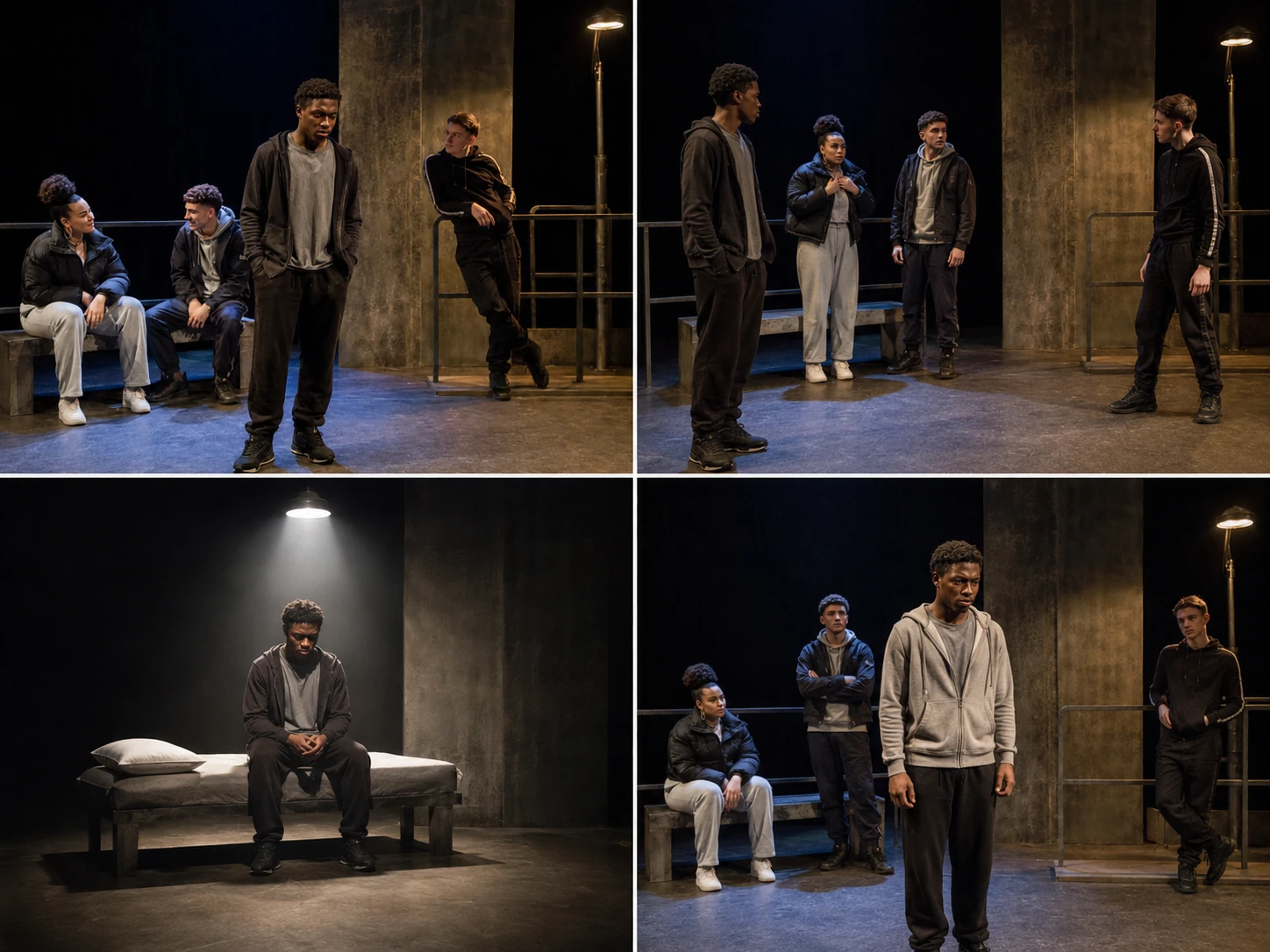
Director prompt: which image uses negative space most effectively, and what would the audience read from it?