← Back to Main Hub
Create your own brief
Imagine, test, justify, refine
Theatre Design Lab
Design is not decoration added at the end. Make a clear choice, test how it works in performance, and explain what the audience should understand or feel.
Start making
Choose a tool
Interactive studio
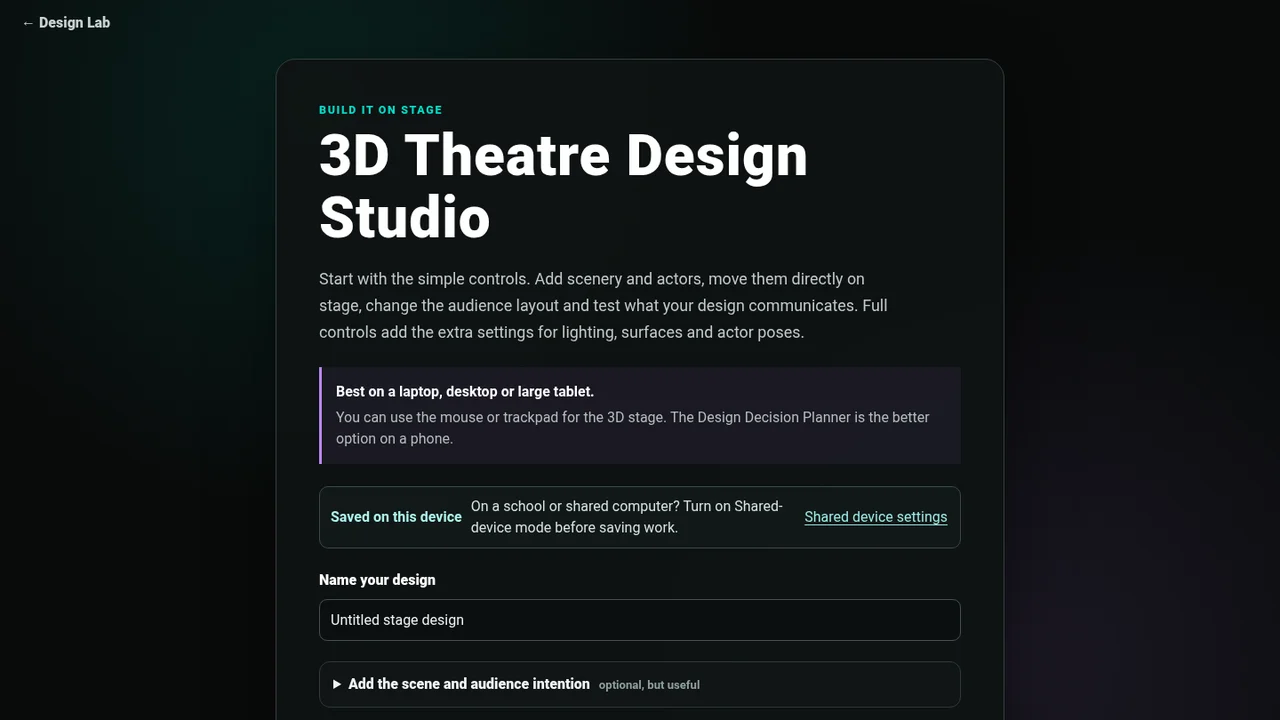
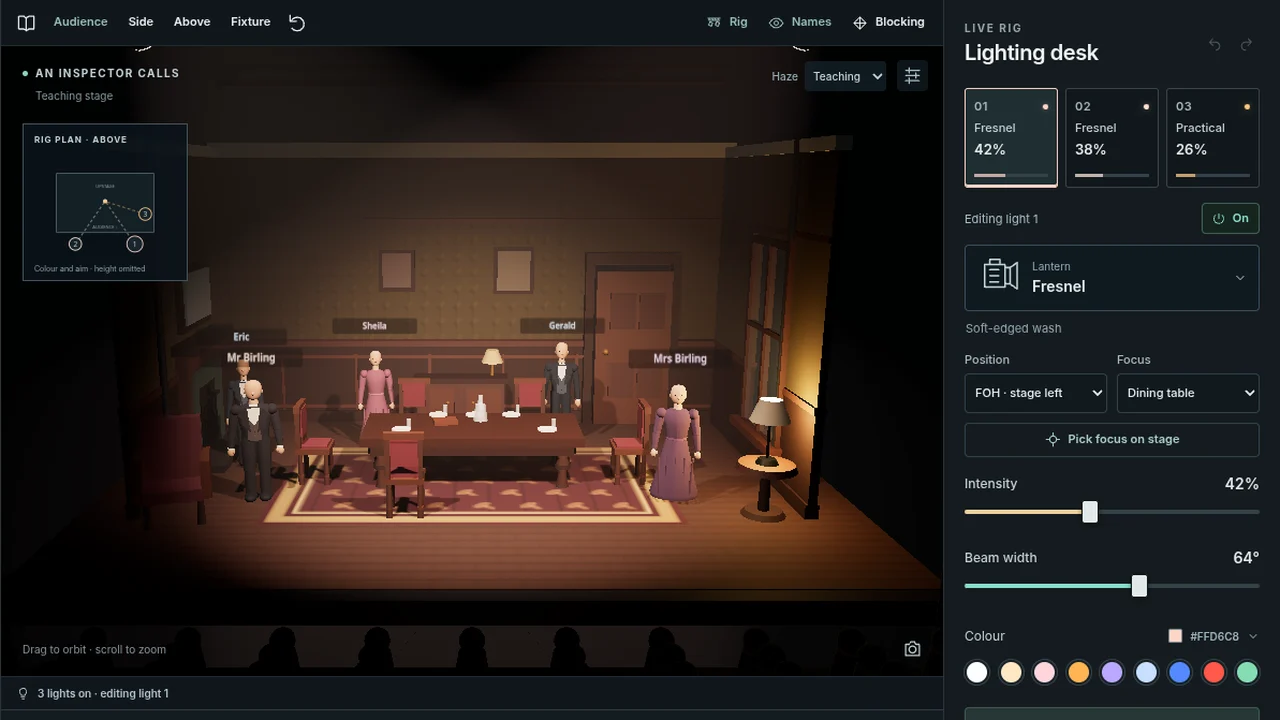
Build a 3D stage design
Arrange scenery, actors and lighting, compare audience layouts, save versions and export a design sheet.
Open 3D studio All design disciplinesPlan and justify a design choice
Turn an idea into precise practical detail, intended audience effect and a usable written explanation.
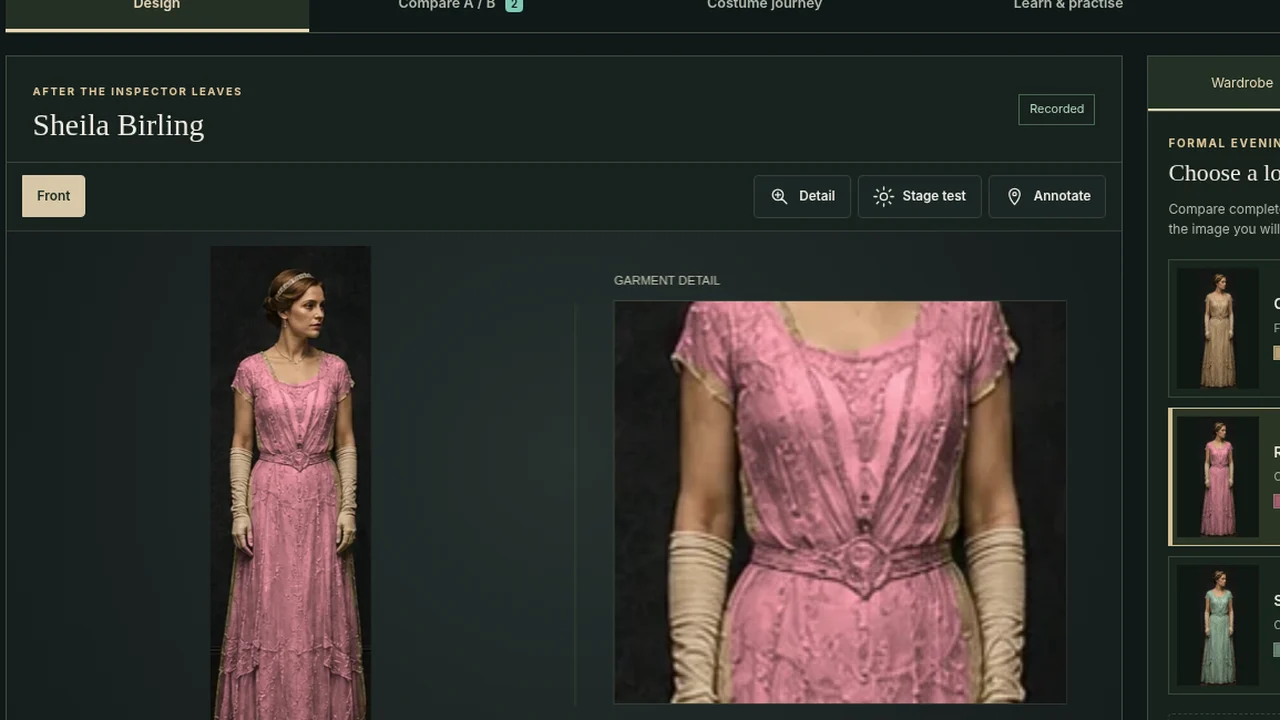
Open design planner Costume design and productionBuild a costume plot
Track every character and scene, develop visual progression, test practical choices and export annotated design evidence.
Open Costume WorkshopA repeatable process
Five stages of useful design work
- 1Read the briefIdentify the moment, context, practical limits and central intention.
- 2Generate choicesExplore more than one solution before settling on the obvious answer.
- 3Specify the detailName materials, colours, positions, transitions, textures, levels and operation.
- 4Test the effectAsk what the audience can actually see, hear, infer and feel.
- 5Refine and justifyKeep, alter or reject the choice using evidence from rehearsal or modelling.
Choose your discipline
What are you designing?
SetSpace, levels, entrances, materials, symbolism and actor movement.
LightingAngle, intensity, colour, focus, shadow, transitions and visibility.
SoundLive or recorded sources, volume, placement, timing, texture and silence.
CostumeSilhouette, colour, fabric, condition, period, status and practical movement.
StagingAudience configuration, proximity, sightlines, focus and spatial relationships.
Try a short challenge
Practical design briefs
IsolationMake one character appear emotionally cut off while remaining physically close to the ensemble.Set · lighting · staging
Power shiftShow control moving from one character to another during a single scene.Costume · lighting · spatial design
Unreliable memoryCreate a world in which the audience cannot fully trust time, place or recollection.Set · sound · lighting
Pressure buildingDevelop tension across a scene without simply making everything louder and darker.Sound · lighting · staging
Two social worldsDifferentiate two groups while allowing moments where their visual identities overlap.Costume · set · ensemble palette
Visible transformationTrack a character’s change across the performance through practical design details.Costume · makeup · lighting
Before calling a design finished
Check that the choice can survive four questions
- What exactly changes?Give observable technical detail rather than a vague adjective.
- Why at this moment?Connect it to action, relationship, context or dramatic structure.
- What does the audience experience?State what they notice and the meaning or response created.
- How would you test it?Identify a rehearsal, model, cue run or comparison that could improve the choice.