Costume Design
Base Layers, Semiotics, and Multi-roling
Possible interpretation: symbolic costume additions
A neutral base layer with visible additions is one efficient way to support multi-roling. Use the photographs below to compare how silhouette, colour and one role-specific item can shift what the audience reads.
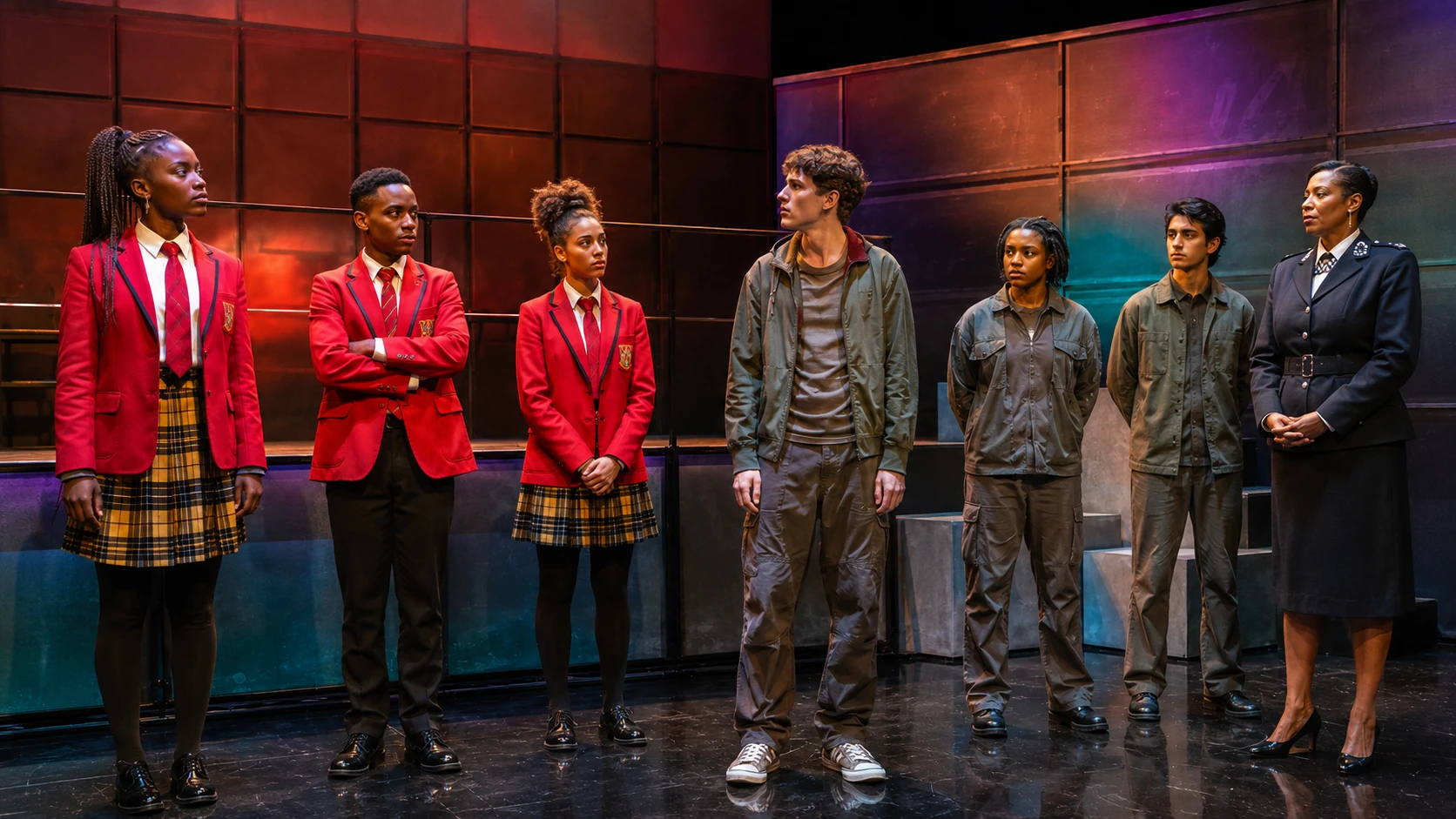
Compare the costume system
The same production image can be read in different ways. Use the buttons to focus on the base, Nought, Cross and authority choices, then decide what you would keep or change.
📝 AQA Terminology Bank
Base Layer
A restrained costume foundation that can stay on through several role changes. It gives the production a consistent visual base while allowing character-specific garments or accessories to read quickly.
Semiotics / Symbolism
Using one repeated garment or accessory to carry meaning established by the production. For example, a distinctive school blazer could become a clear status signifier if the audience sees that visual code used consistently.
Visible costume change
When an actor puts on or removes a garment in view of the audience. It can support rapid multi-roling and make the mechanics of role change deliberately visible.
📝 Exam Strategy: The Design Grid
Use this structure to make a precise, justified response: choice ➔ dramatic reason ➔ audience effect ➔ terminology.
| Costume Choice (What) | Impact Justification (Why) | Key Terminology |
|---|---|---|
| Click 'Generate Example' to see a strong answer... |