Personalise the site

Choose your exam board

This filters set texts and takes you to the right written-exam guidance. You can change it at any time.

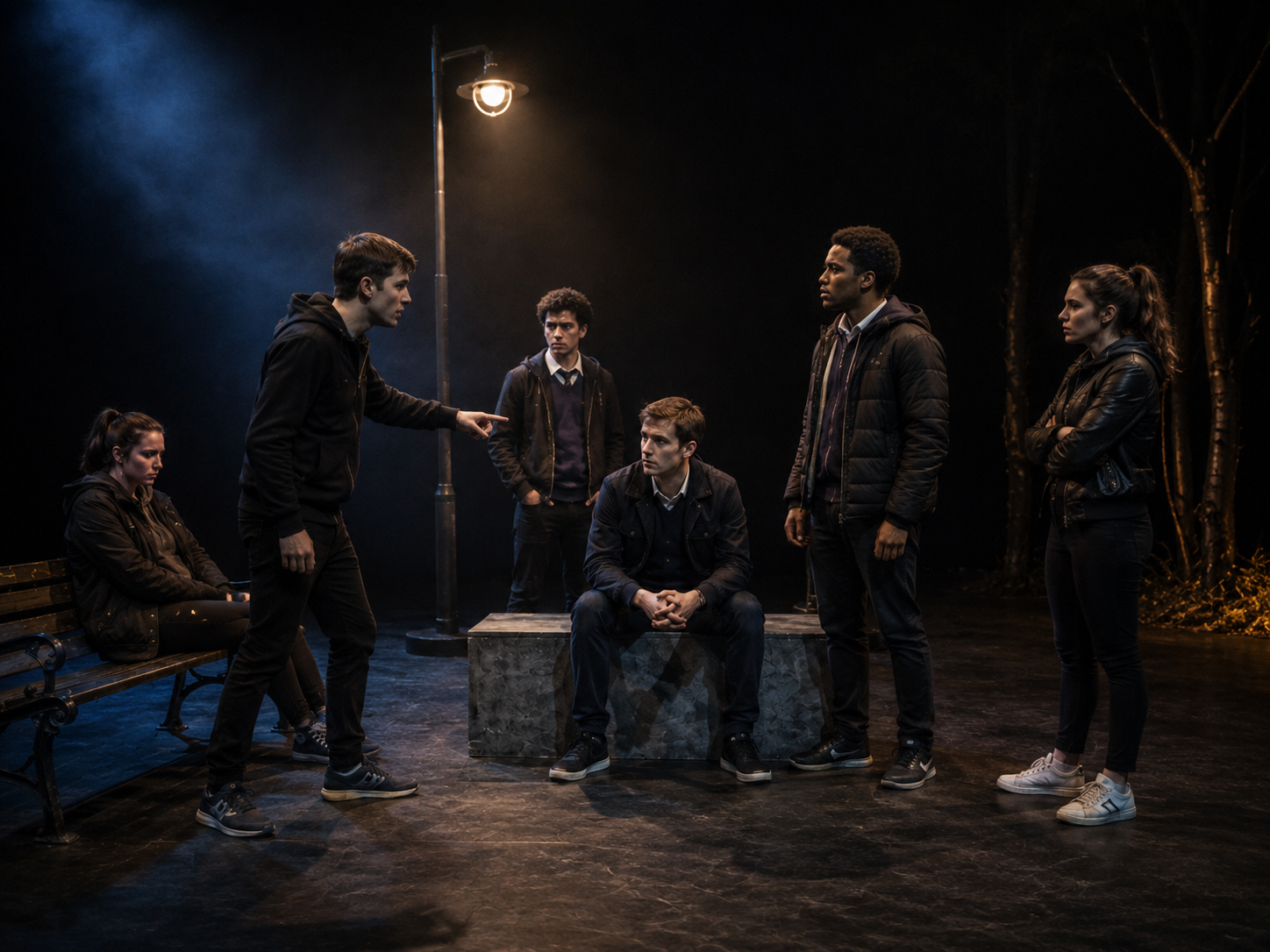
Minimalist black-box staging for DNA with six young adult actors playing teenagers, a streetlamp, bench and bare trees.
Pearson describes the first professional production as end-on, with projection and minimal furniture. This teaching visual keeps the same principle: a stripped stage world where a few strong elements do the location work and the group dynamics stay central.
Written 2007

Kelly wrote the play for young performers through National Theatre Connections.

Professional production 2008

The National Theatre staged it in the Cottesloe, directed by Paul Miller.

Young cast, young audience

The play was created to speak directly to teenagers without adding an adult viewpoint.

Flexible casting

The published licensing information allows names and genders to be changed to suit performers.

The context that earns its place in an answer

Pearson asks students to understand the context in which the text was created and first performed. The strongest use of that context is practical: connect it to a choice about acting, directing or design rather than dropping in a detached history paragraph.

National Theatre Connections

DNA began as an NT Education Connections commission. That matters because the play was written for young performers and a young audience, which helps explain its stripped-back language, flexible casting and focus on a self-contained teenage world.
The first professional production

The National Theatre archive records the Cottesloe production opening on 16 February 2008. Paul Miller directed, Simon Daw designed it and Paule Constable designed the lighting. The archive also holds production photographs, costume files, show reports and recordings.

Adults stay outside the stage world

School, police and family life exist off stage, but the audience spends its time with the teenagers. That makes the group feel unusually self-governing. Directors can reinforce this by keeping adult institutions as sound, projection or reported events rather than physical characters.

Technology is strangely absent

Pearson notes that a play written in 2007 avoids the phones and online communication that now dominate teenage life. That helps the piece feel less dated. A modern production has to decide whether to preserve that absence or make technology visible without changing the dramatic logic.

Teenagers and public fear

The play arrived during a period when British media often portrayed groups of teenagers as threatening. Use that as a possible audience context rather than a claim that Kelly wrote a simple “hoodie culture” play. His central concern is the group’s moral logic.

The central moral problem

Kelly has described the play in terms of sacrificing an individual for the many and asking how many wrong actions can be justified by a supposedly greater purpose. That question gives you a much stronger route into Phil than calling him evil and moving on.

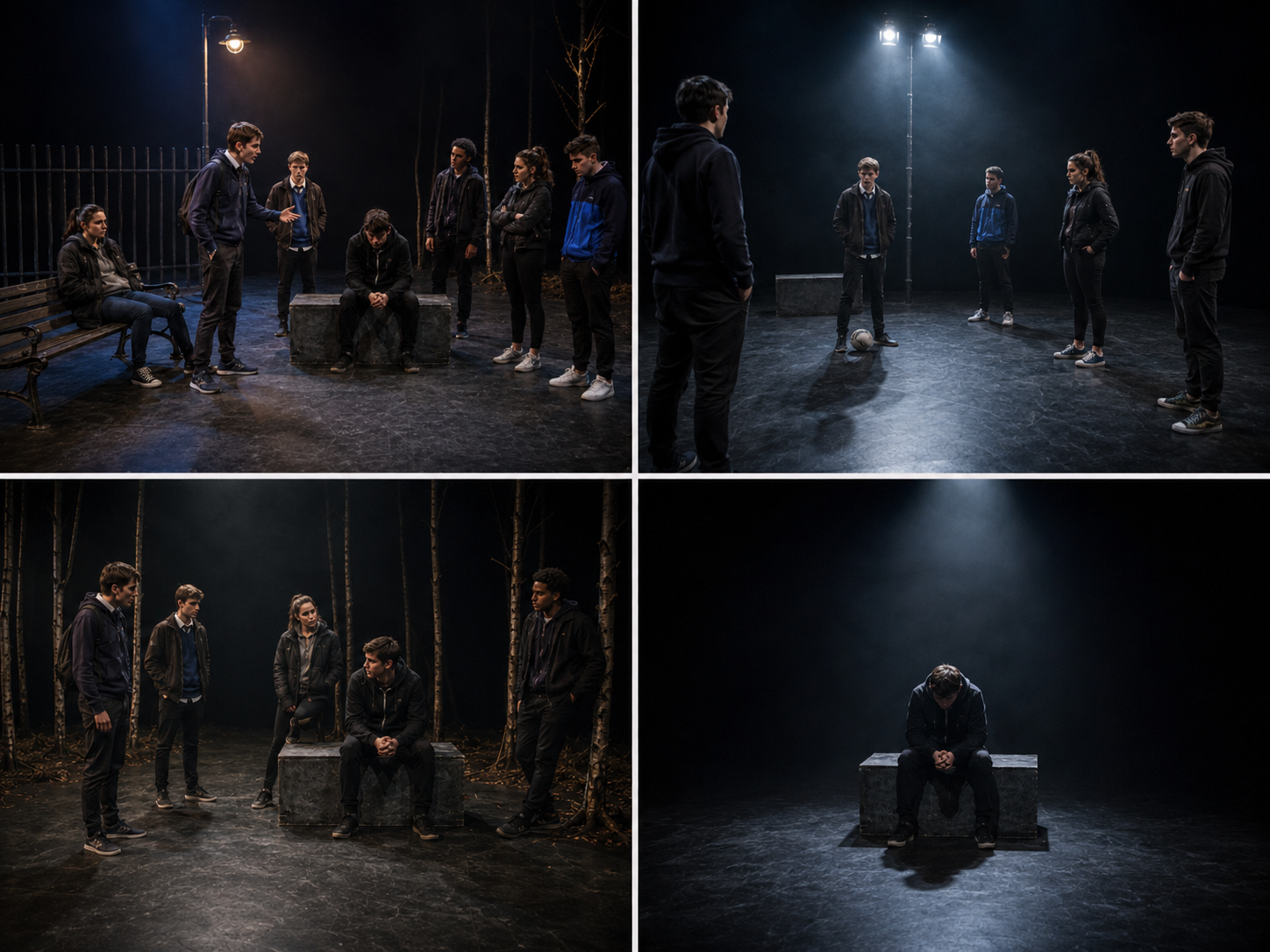
Four staged moments from DNA showing how the same stage world can hold increasingly serious consequences.
Context becomes useful when it changes the staging. For example, the same sparse world can feel more closed and more isolating as the group’s choices narrow their options.

Turn context into a Drama sentence

ContextStage choiceWhy it matters
Created for young performersKeep the teenage ensemble physically dominant throughout.The audience stays inside their world rather than receiving an adult explanation.
First production used projectionShift location with projected texture or image instead of a full scene change.The action can move quickly while the same group remains trapped in view.
Adults remain off stageUse distant sirens, school bells or recorded announcements sparingly.Institutions exist around the group without rescuing them.
Flexible names and gendersCast against expected gender stereotypes if it serves the concept.The audience focuses on behaviour, hierarchy and belonging rather than treating violence as gender-specific.

Primary sources

Privacy on school and shared computers

Using a shared device?

Shared-device mode stops Stark Drama leaving your recent-page list or project work behind after the browser session. It also resets optional analytics to off. Your exam-board choice may remain as a simple site preference.

Turning it on clears Stark Drama work already saved in this browser. Back up anything you need first.