Lighting Design
The scripted lighting change, interrogation and visual focus
Text source: An Inspector Calls by J. B. Priestley. The short lighting-direction extracts below are identified so you can separate Priestley’s requirements from your own design choices.
Start with Priestley's explicit lighting direction
Priestley specifies that the lighting is "pink and intimate" before the Inspector arrives and then becomes "brighter and harder". Treat that change as the requirement. Your lanterns, exact colour, intensity, focus, angle and cue speed are production choices that you should justify for the moment.
Try it on the live stage
The new An Inspector Calls Lighting Lab opens the standalone 3D Birling dining-room scene so you can build the opening state, change it for the Inspector's arrival, compare cues and turn the finished lighting into precise design language.
Lighting reference board
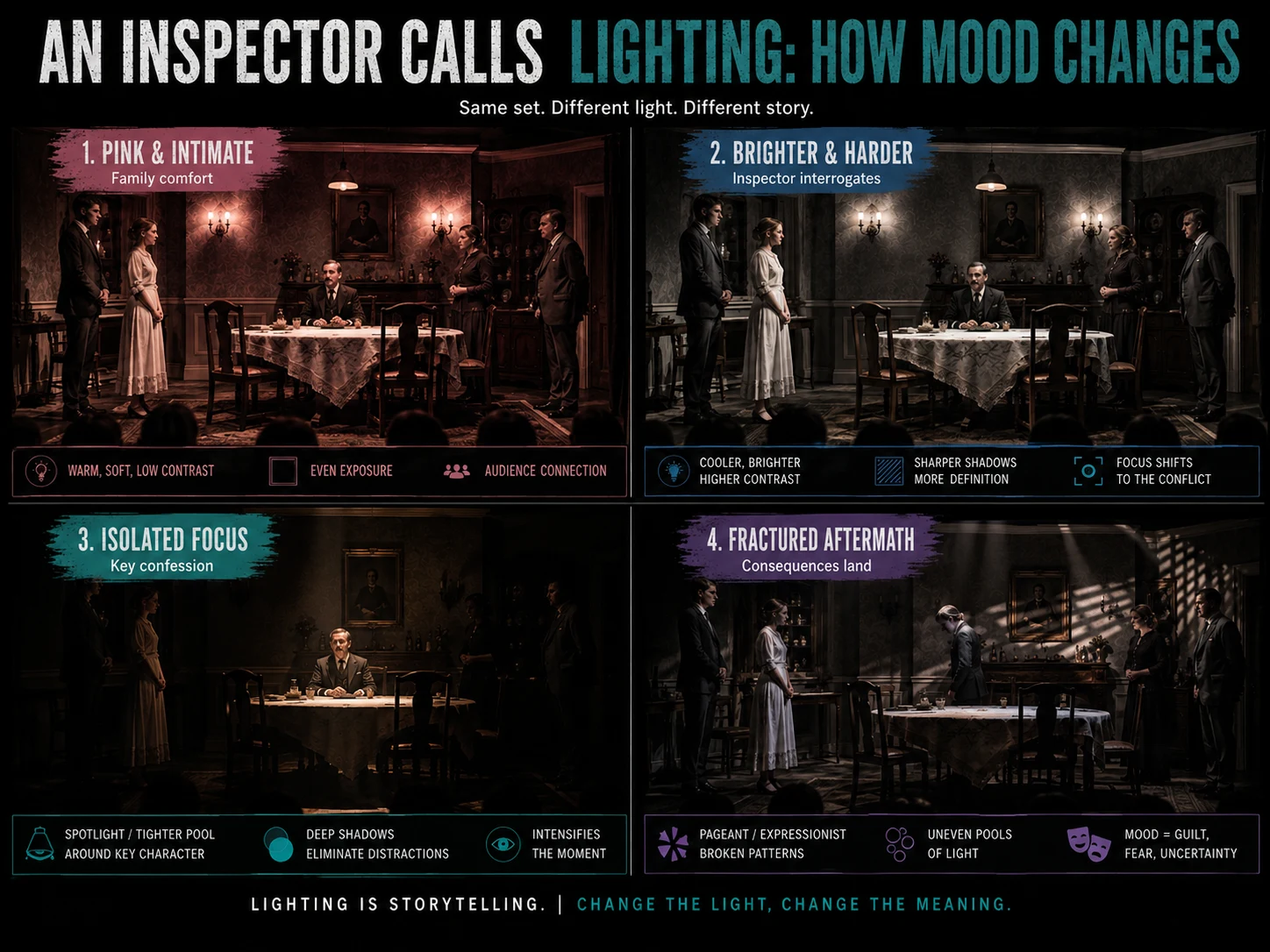
Stagecraft question: how does the same room feel different under each lighting state?
📝 AO3/AO4 Response Builder
Use these pre-structured sentences in your Component 3 exam to confidently use professional lighting terminology to justify Priestley's themes.
| Design Element (What) | Impact Justification (Why) | Key Terminology |
|---|---|---|
| As the Inspector arrives, I would cue a clear change from the warm Fresnel wash to a brighter, harder neutral-white state. | This realises Priestley's 'brighter and harder' direction. The increased exposure and firmer visual definition make the room feel less flattering and more scrutinised, supporting the shift in power as the Inspector begins to question the family. | Lighting Cue Brighter/Harder State Contrast Audience Focus |