Synopsis & journeys
The chain of events and Eva Smith’s timeline
What this task rewards: The Well-Made Play
Do not simply retell the story from start to finish. An Inspector Calls is structurally designed as a Well-Made Play and a moral whodunnit. It takes place in "real time." A strong response will explain how Priestley structures the "chain of events"—building tension through dramatic irony, carefully timed entrances/exits, and gripping act cliffhangers to systematically dismantle the family's Edwardian complacency.
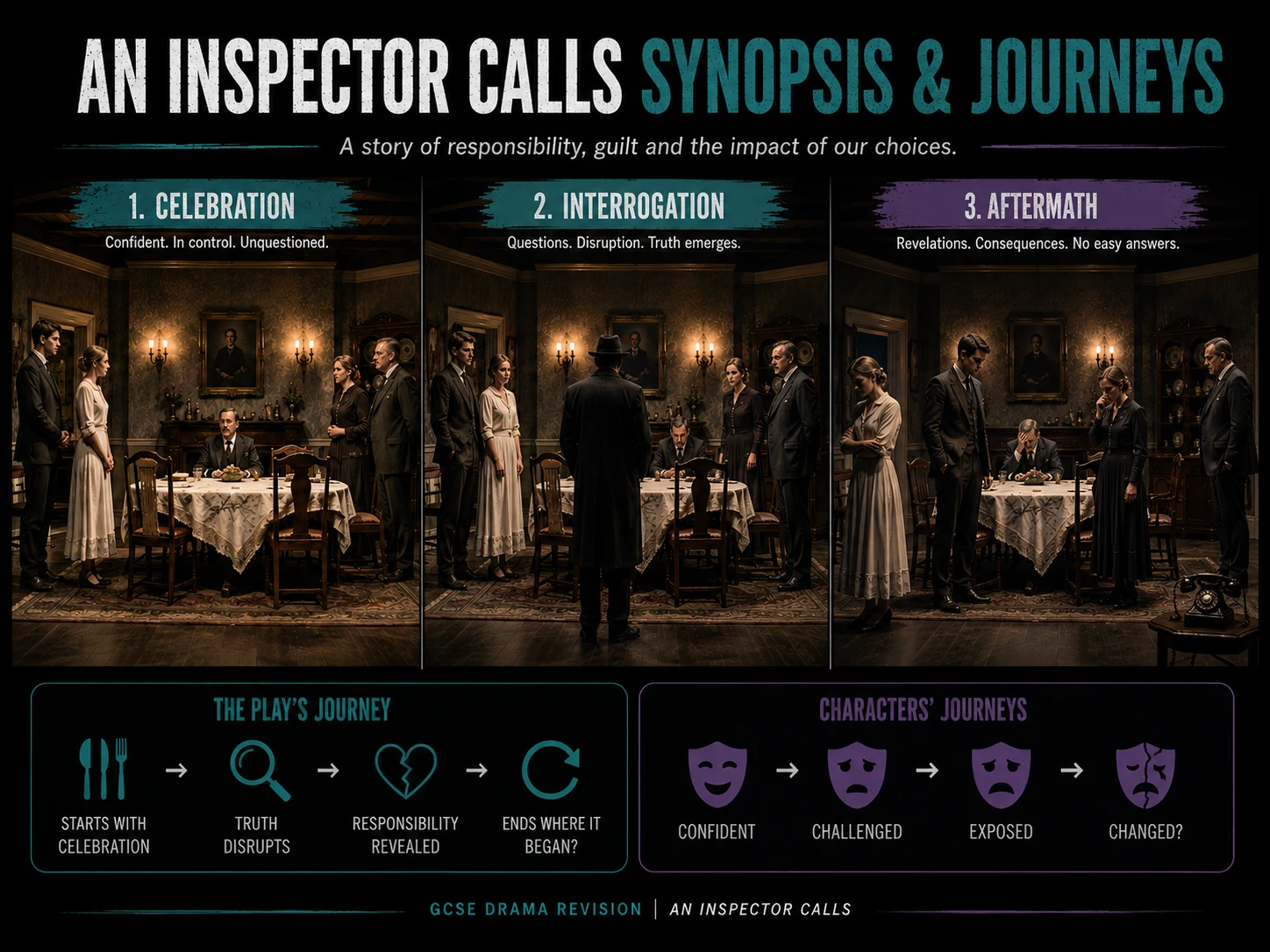
Exam use: which moment looks like the turning point, and how would you explain its effect on the audience?
The 'Chain of Events'
The Inspector's interrogation is not random. It meticulously traces the tragic, downward spiral of Eva Smith (Daisy Renton) by exposing the consecutive actions of each family member. This is the socialist message: actions have consequences.
The Dismissals
The play opens with Arthur Birling celebrating his daughter's engagement and preaching capitalist individualism. The Inspector shatters this by revealing Arthur sacked Eva Smith from his factory for leading a strike for higher wages. Shortly after, Sheila, acting out of petty, upper-class jealousy, uses her family's status to get Eva fired from a respectful job at Milwards department store. Act 1 ends on a cliffhanger as Gerald realizes he recognizes the name 'Daisy Renton'.
The Affair & The Charity
The tension escalates. Gerald confesses to keeping Eva (now Daisy) as his mistress, abandoning her when the affair became inconvenient. Later, a pregnant and destitute Eva turns to the Brumley Women’s Charity Organization. Sybil Birling, offended that Eva used the "Birling" name, coldly uses her influence to deny the girl any financial help, telling her to seek out the child's father. Act 2 ends with the horrifying realization of who that father is.
The Final Collapse
Eric confesses to drunkenly assaulting Eva and later stealing money from his father's office to support her (which she refused). The "chain of events" is complete; they are all collectively responsible for her suicide. Following the Inspector's socialist warning and exit, the older generation attempts to rebuild their complacency by proving Goole was a "fake." Just as they celebrate avoiding a public scandal, the phone rings: a girl has died, and a real police inspector is on his way.
AO3/AO4 response builder
Use these pre-structured sentences in your exam to instantly hit the higher levels of response for structural analysis and directorial timing.
| Directorial Choice (What) | Impact Justification (Why) | Key Terminology |
|---|---|---|
| I would direct the Inspector's initial entrance to precisely interrupt Arthur Birling mid-sentence, just as he claims "a man has to mind his own business." | This structural timing is crucial; the Inspector physically embodies Priestley's socialist rebuttal, cutting through Birling's capitalist monologue to instantly establish dramatic tension and conflict. | Structural Timing Interruptive Entrance Capitalist Monologue Socialist Rebuttal |